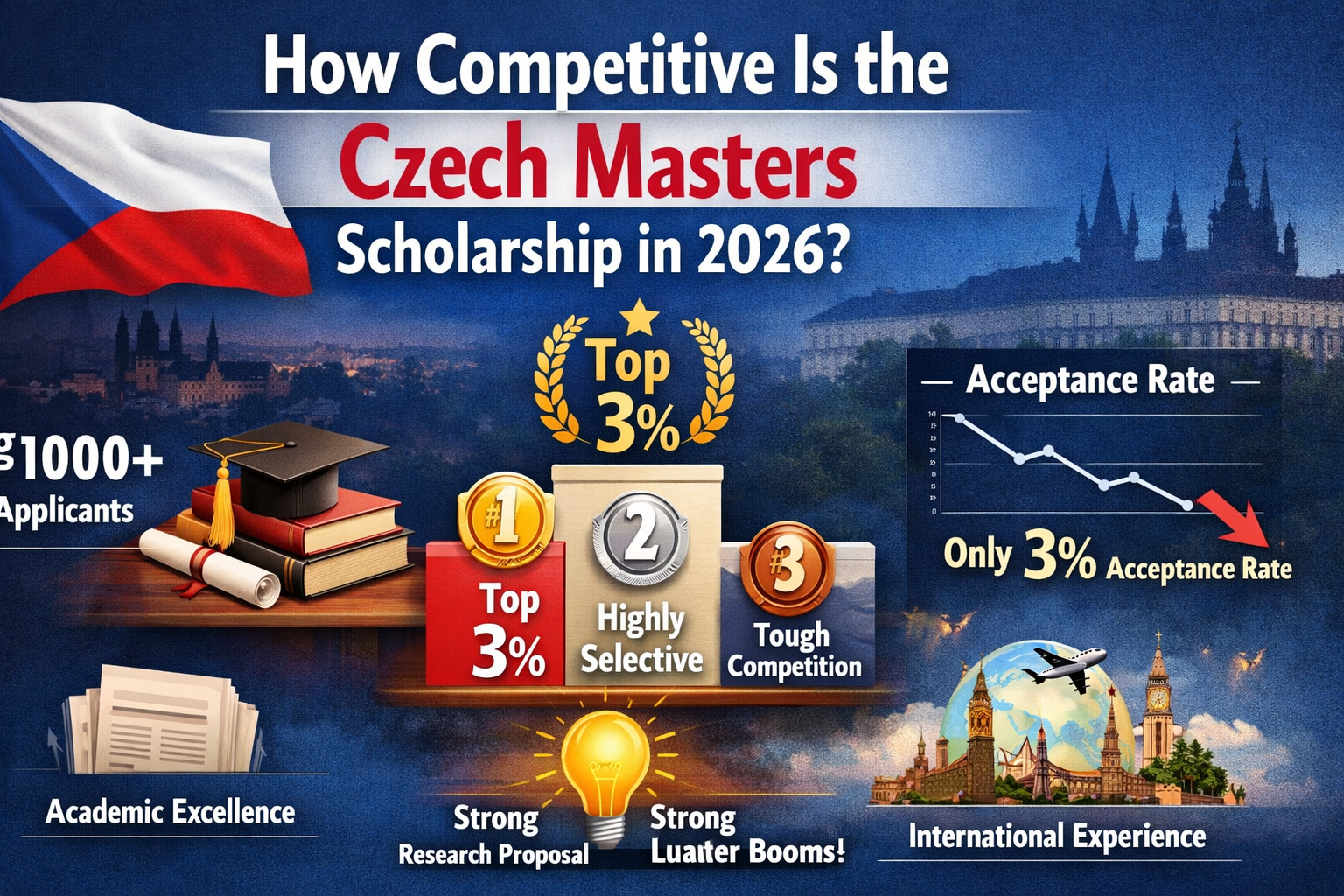
The Czech Republic has become an increasingly popular destination for international students seeking high-quality education at affordable costs. With its globally recognized universities, strong research culture, and central European location, the country offers a compelling academic environment. Among the most attractive opportunities for international applicants is the Czech Government Scholarship for Master’s studies. As interest continues to rise, many students are asking an important question: How competitive is the Czech Masters Scholarship in 2026? This article explores the competitiveness of the scholarship, key selection factors, and how applicants can improve their chances.
Overview of the Czech Masters Scholarship
The Czech Masters Scholarship, commonly known as the Czech Government Scholarship, is offered to students from selected developing and priority countries. It is funded by the Ministry of Education, Youth and Sports of the Czech Republic and aims to support academic development, research, and international cooperation.
For Master’s programs, the scholarship typically covers tuition fees, provides a monthly stipend to support living expenses, and includes accommodation support and health insurance. Programs are usually taught in Czech, although some universities offer preparatory Czech language courses for international students before the academic program begins.
Rising Demand in 2026
By 2026, competition for the Czech Masters Scholarship is expected to be higher than ever. Several factors contribute to this growing demand. First, global education costs are increasing, making fully funded or government-backed scholarships more appealing. Second, the Czech Republic’s universities continue to climb in international rankings, particularly in fields such as engineering, medicine, economics, and natural sciences.
Additionally, political stability, a high standard of living, and relatively low living costs compared to Western Europe have made the Czech Republic an attractive alternative for students who might otherwise consider Germany, France, or the Netherlands.
Acceptance Rates and Competitiveness
While official acceptance rates are not always published, estimates based on previous years suggest that only a small percentage of applicants are selected. For many countries, hundreds or even thousands of students apply annually, while only a limited number of scholarships are awarded.
In 2026, the competition is likely to remain intense due to limited funding and a fixed number of slots allocated to each eligible country. This means that even well-qualified applicants may not be selected unless their academic and personal profiles strongly align with the scholarship’s objectives.
Key Selection Criteria
The competitiveness of the Czech Masters Scholarship largely depends on how well an applicant meets the selection criteria. Academic excellence is a primary factor. Applicants with high undergraduate grades, strong academic references, and relevant coursework have a clear advantage.
Another important factor is the relevance of the chosen field of study. Preference is often given to applicants whose academic goals align with the development priorities of their home countries. Fields such as engineering, environmental science, healthcare, agriculture, and economics are often highly favored.
Motivation letters also play a critical role. A well-written statement that clearly explains academic goals, future career plans, and the intended contribution to the applicant’s home country can significantly improve chances. Selection committees look for candidates who demonstrate leadership potential, commitment, and long-term impact.
Language and Preparation Requirements
Language proficiency can influence competitiveness. Since many Master’s programs are taught in Czech, applicants must either demonstrate prior knowledge of the language or show willingness to complete a preparatory Czech language course. Students who already have basic or intermediate Czech skills may be viewed more favorably, as they are likely to adapt faster to academic life.
Some programs taught in English may require proof of English proficiency, such as standardized test scores. Meeting or exceeding these language requirements strengthens an application.
Country Quotas and Regional Competition
One aspect that makes the Czech Masters Scholarship particularly competitive is the use of country-specific quotas. The Czech government allocates a certain number of scholarships to each eligible country. This means applicants are not competing globally but primarily against candidates from their own country.
In countries with a large pool of qualified applicants, competition can be extremely tough. In contrast, applicants from countries with fewer candidates may face slightly less competition, although academic standards remain high across all regions.
How to Improve Your Chances in 2026
To stand out in the competitive 2026 selection cycle, applicants should start preparing early. Maintaining a strong academic record is essential, but it is equally important to build a compelling profile. Participating in research projects, internships, community development initiatives, or leadership roles can strengthen an application.
Applicants should also invest time in crafting a clear and honest motivation letter. Rather than using generic statements, it is important to show a deep understanding of the chosen field and explain how studying in the Czech Republic fits into long-term goals.
Securing strong recommendation letters from academic or professional mentors who can speak in detail about the applicant’s abilities and character is another critical step.
Final Assessment of Competitiveness
In summary, the Czech Masters Scholarship in 2026 is highly competitive. With growing global interest, limited funding, and strict selection standards, only the most prepared and well-rounded candidates are likely to succeed. However, competition should not discourage motivated students. With careful planning, strong academic performance, and a clear sense of purpose, applicants can significantly improve their chances of being selected.
For students seeking an affordable, high-quality European education with government support, the Czech Masters Scholarship remains a valuable and prestigious opportunity worth pursuing.