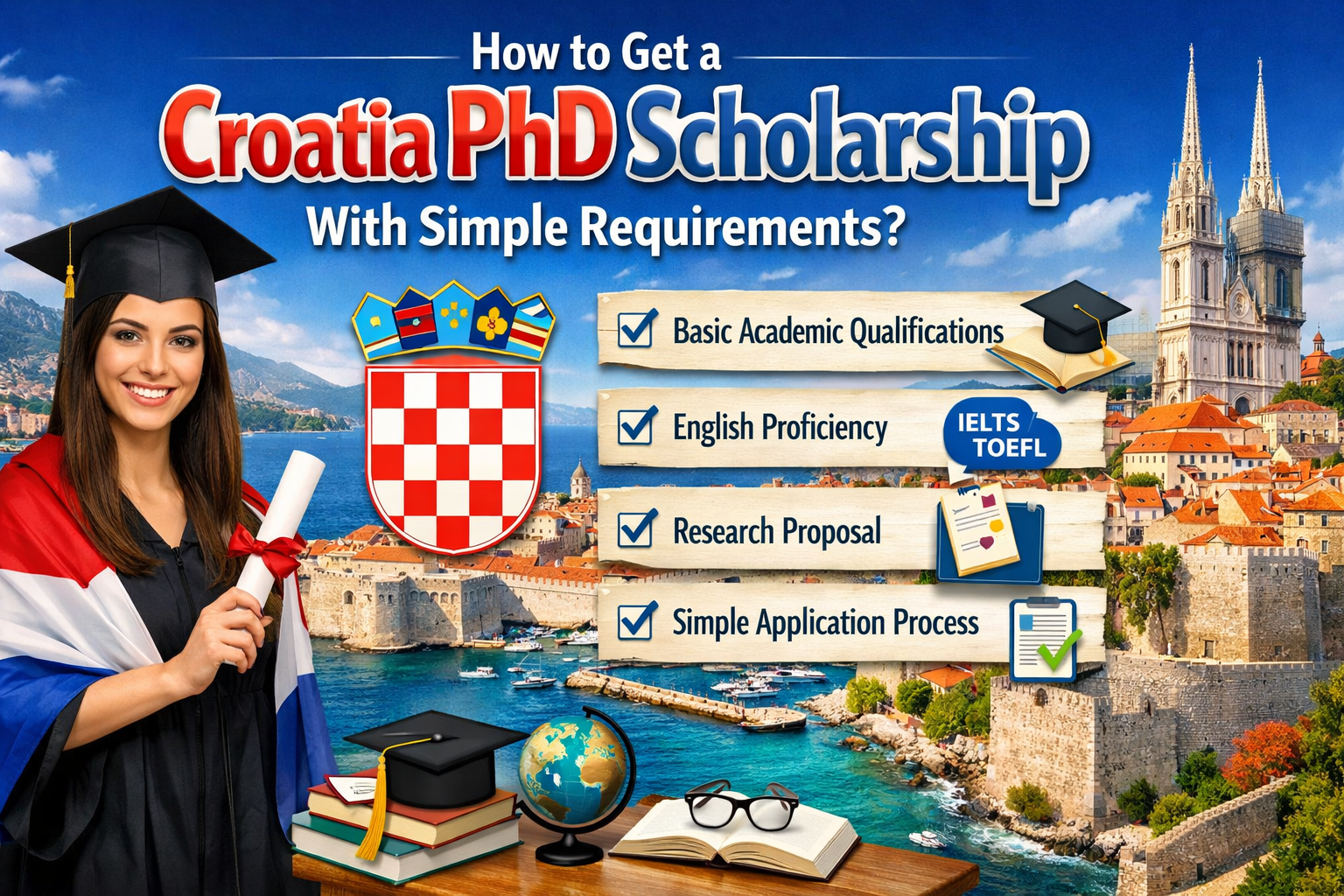
Croatia is steadily emerging as an attractive destination for international PhD students who want high-quality education, affordable living costs, and access to European research networks. With several universities offering English-taught doctoral programs and government-backed scholarships, Croatia provides an excellent opportunity for students looking for PhD scholarships with relatively simple requirements. This article explains everything you need to know—from eligibility and application steps to tips for improving your chances.
Why Choose Croatia for a PhD?
Croatia offers a unique blend of academic excellence and lifestyle benefits. Croatian universities are part of the European Higher Education Area, which means degrees are internationally recognized. The country also has strong research output in fields such as engineering, medicine, natural sciences, tourism, and social sciences.
Key advantages include:
- Affordable tuition compared to Western Europe
- Low cost of living for students
- Access to EU-funded research projects
- Safe environment and high quality of life
- Increasing number of PhD programs taught in English
These benefits make Croatia especially appealing for students from Asia, Africa, and developing countries.
Types of Croatia PhD Scholarships
There are several funding options available for international PhD students in Croatia:
1. Government of Croatia Scholarships
These are usually offered through national agencies and ministries. They often cover:
- Monthly stipend
- Tuition fees
- Health insurance
- Accommodation support
These scholarships are competitive but have clear and straightforward eligibility criteria.
2. University-Funded PhD Positions
Many Croatian universities offer funded PhD positions linked to research projects. In these cases, students work as early-stage researchers and receive a salary instead of a traditional scholarship.
3. EU and Research Project Scholarships
PhD students may also be funded through EU research initiatives. These scholarships are often merit-based and tied to specific research topics.
Simple Eligibility Requirements
One of the biggest advantages of Croatia PhD scholarships is that the requirements are generally less complicated compared to countries like the US or UK.
Common requirements include:
- A recognized Master’s degree in a relevant field
- Academic transcripts
- Basic English language proficiency
- Research proposal aligned with university interests
- Motivation letter
- CV or academic resume
In many cases:
- No GRE or GMAT is required
- IELTS or TOEFL may be waived if prior education was in English
- Work experience is not mandatory
Language Requirements
Most PhD programs in Croatia accept international students with English proficiency, especially for research-based doctoral studies. While some universities ask for an English test score, many accept alternative proof such as:
- A letter from your previous university stating English as the medium of instruction
- Interview-based assessment
Learning basic Croatian is helpful for daily life, but it is usually not mandatory for PhD admission.
Step-by-Step Application Process
Step 1: Choose Your Research Area and University
Start by identifying Croatian universities that match your research interests. Look for faculties and departments actively publishing research in your field.
Step 2: Prepare a Strong Research Proposal
Your research proposal is one of the most important parts of the application. It should clearly explain:
- Research problem
- Objectives
- Methodology
- Expected outcomes
Make sure your proposal aligns with the expertise of potential supervisors.
Step 3: Contact a Potential Supervisor
In Croatia, having a supervisor who supports your application significantly increases your chances. Send a concise email introducing yourself, your academic background, and your research idea.
Step 4: Submit University Admission Application
Once a supervisor agrees, apply for PhD admission at the university. This usually involves submitting academic documents, proposal, and personal statements.
Step 5: Apply for Scholarship Funding
After or alongside admission, apply for relevant scholarships. Some scholarships require university acceptance first, while others allow parallel applications.
Documents Checklist
Typically required documents include:
- Academic transcripts and degree certificates
- Research proposal
- Curriculum Vitae (CV)
- Motivation letter
- Recommendation letters (usually 1–2)
- Passport copy
All documents may need to be translated into English or Croatian.
Tips to Increase Your Chances
- Choose a realistic research topic aligned with national or EU priorities
- Tailor your motivation letter to Croatia and the specific university
- Contact supervisors early, preferably 6–9 months in advance
- Highlight research skills, publications, or thesis work
- Apply to multiple universities and funding sources
Consistency and clarity often matter more than a perfect academic record.
Cost of Living and Student Life
Croatia is relatively affordable for PhD students. Monthly living expenses generally include:
- Accommodation
- Food
- Public transport
- Health insurance
Scholarship stipends are usually sufficient to cover basic expenses. Students also enjoy a balanced lifestyle, cultural diversity, and access to Europe’s Schengen Area for travel and academic conferences.
Career Opportunities After PhD
A PhD from Croatia opens doors to:
- Academic careers in Europe and beyond
- Research roles in EU-funded projects
- Industry positions in technology, healthcare, tourism, and engineering
Graduates also benefit from international research exposure and strong academic networks.
Final Thoughts
Getting a Croatia PhD scholarship with simple requirements is achievable with proper planning and preparation. The country offers a welcoming academic environment, affordable education, and growing research opportunities. By choosing the right university, preparing a focused research proposal, and applying strategically, international students can successfully secure fully funded or partially funded PhD positions in Croatia.